This series is based on the motion picture industry, James Georgopoulos used these powerful images of both in-front of the camera and behind the camera tools to make these films.
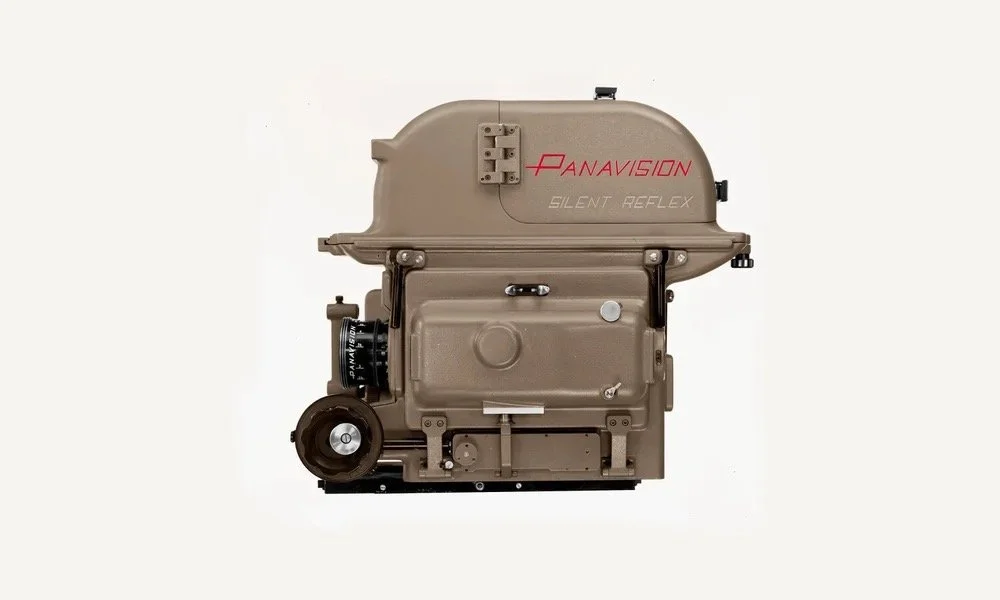
Upper West Side 2015
Actual Panavision camera used to film the tv show Seinfeld.
Panavision Silent Reflex, or PSR, introduced in 1967. Panavision built it by gutting old Mitchell camera bodies and putting them in custom blimps, and it became the industry workhorse through the seventies and eighties.
The filmography is serious: The Graduate, Superman, Star Wars, The Empire Strikes Back, Alien, Butch Cassidy and the Sundance Kid, The Wild Bunch, and The Exorcist. Panavision itself confirmed the PSR was used on Seinfeld's pilot — they posted a photo of Jerry Seinfeld standing next to one on set.
By the nineties it had mostly moved to sitcoms as a pedestal-mounted studio camera,

Hit Man 2011.
The actual gun used by Donald Sutherland in the 2011 remake of The Mechanic — a nickel-plated M1911A1 .45 ACP pistol, built on an Auto Ordnance frame with an original U.S. Army-issue frame. The slide is engraved with the Latin phrase Amat Victoria Curam — victory loves preparation — on one side, and Victory Loves Preparation in English on the other. In the film, Harry McKenna tells Arthur Bishop he's carried it for thirty-three years, a gift from Admiral Beasley of the Sixth Fleet. Archival pigment print in an artist walnut frame, edition of five plus two artist proofs.
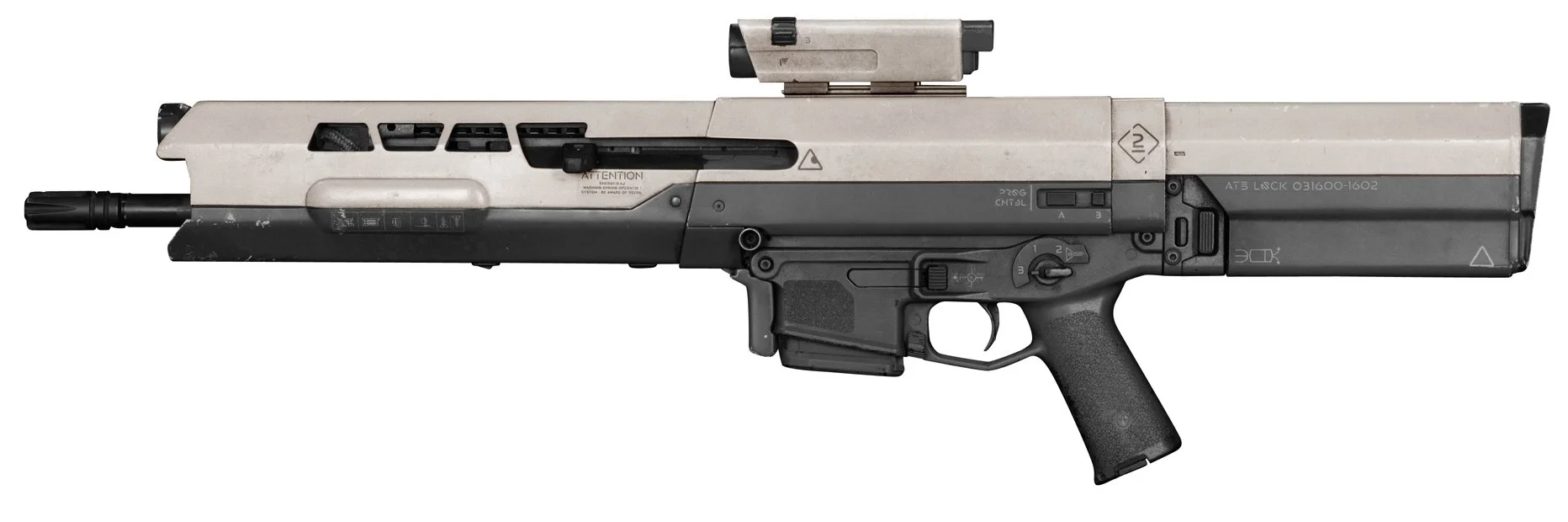
Earth 2020
The actual gun Tom Cruise carried as Jack Harper in the 2013 film Oblivion, directed by Joseph Kosinski — a Bushmaster ACR in 5.56 NATO, with folding stock, tri-rail handguard, and Magpul sights, housed in a custom futuristic shell with decals and static control buttons. The prop later sold at Propstore with a Tom Cruise-autographed photo. Archival print, 24 by 56 by 2 inches.

Wall Street, 2020.
The actual gun used by Christian Bale as Patrick Bateman in American Psycho, directed by Mary Harron — a second-generation Glock 17 in 9mm, chambered for the 9x19mm Parabellum cartridge, with a 17-round magazine. The Gen 2, produced from 1988 to 1998, added checkered grip texture over the Gen 1's smooth pebble finish but kept the same Safe Action trigger system and polymer frame. The film is set in 1987, making the gun a deliberate anachronism — fitting for a character whose entire identity is built on status and surface. In the film, Bateman pulls the Glock from under his coat at an ATM, nearly kills a stray kitten, then shoots the woman who stops him and opens fire on pursuing police, whose patrol cars inexplicably explode. Archival print, 24 by 36 by 2 inches."
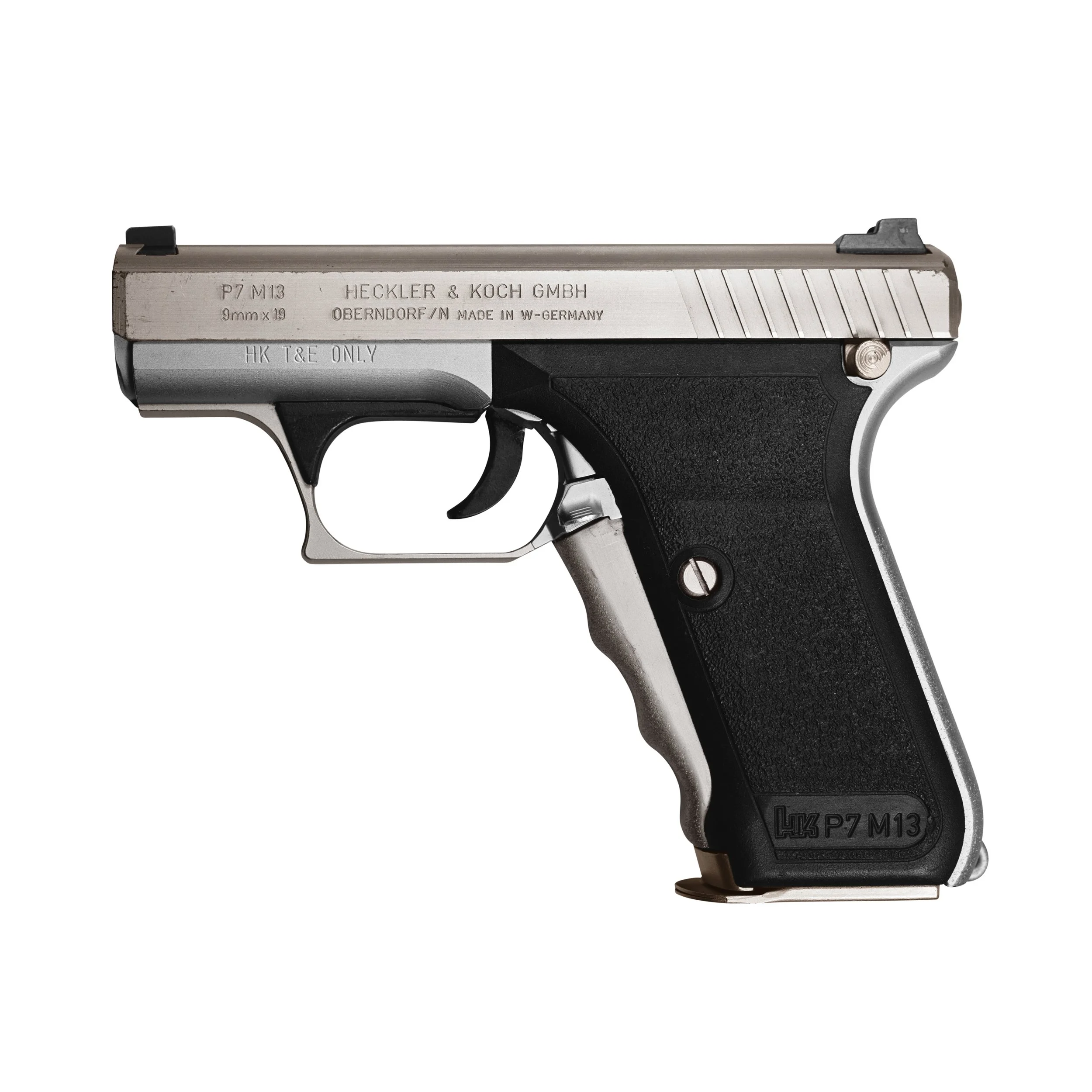
Die Hard, 2020
The actual hard-chrome H&K P7M13 carried by Alan Rickman as Hans Gruber in the 1988 film Die Hard, directed by John McTiernan — a 9mm pistol with a 13-round double-stack magazine, produced from 1982 to around 2000. Its signature feature is the squeeze cocker: a lever in the front of the grip that cocks the striker as you squeeze, so there's no external safety and no first-shot trigger pull. It also uses a gas-retarded blowback system and a fixed polygonal barrel, which is why it was so accurate. The screen-used gun is now on display at the NRA museum. Archival print, 24 by 36 by 2 inches."

Thunderball, 2016.
Panavision camera housing used for the underwater filming of Thunderball, 1965, and Jaws, 1975. Designed by Jordan Klein, the underwater cinematographer who co-won the Academy Award for Thunderball's special effects and later received a Technical Achievement Oscar in 2002 for pioneering underwater camera housings. Klein started building brass-and-silver housings in 1948 and patented the Mako Shark housing that sold fifty-five thousand units. For Jaws, Panavision created a custom waterproof enclosure for the Panaflex so cinematographer Bill Butler could shoot at the waterline — that housing is now part of the Academy Museum's collection. Archival print, 24 by 36 by 2 inches."

